
Rise casino Plinko
Introduction
Plinko looks almost too simple to deserve a long analysis. A ball drops from the top of the board, hits a field of pegs, changes direction again and again, and finally lands in a slot with a multiplier. That is the whole visual idea. Yet in practice, Rise casino Plinko creates a playing experience that is very different from what many UK players expect from online slots, Rise Casino roulette guide before choosing a real money casino, or crash-style formats.
I have spent enough time reviewing casino products to know that the simplest layouts often hide the most important practical questions. With Plinko, the interface is easy to read within seconds, but the real experience depends on details that are not obvious at first glance: the number of rows, the chosen risk level, the spread of multipliers, the speed of each round, and the psychological effect of watching near-misses and sudden spikes. That is exactly why this format keeps attracting attention.
This article is focused strictly on the game itself. I am not treating it as a general casino review page. Instead, I will break down how Plinko at Rise casino works, why it feels engaging even though it has no storyline or bonus guide at Rise Casino for UK players round, what kind of session it creates in real terms, and what a player should understand before placing the first bet.
What Plinko is and why it keeps drawing players in
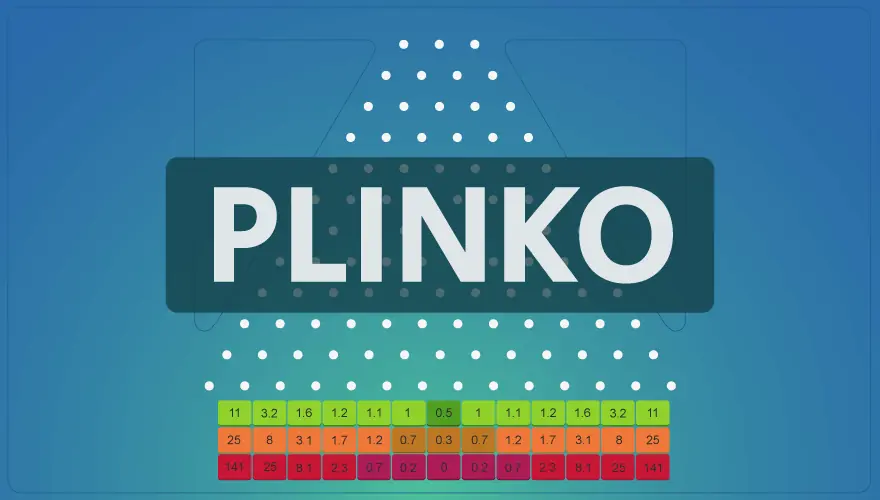
At its core, Plinko is a probability-driven drop game. You choose a stake, set the board conditions available in the interface, release a ball, and wait for it to bounce through a pyramid of pins until it lands in one of the payout pockets at the bottom. Each pocket carries a multiplier. Most balls tend to finish in the more central zones, while the highest multipliers usually sit on the far edges where the path is much less likely.
That sounds straightforward, and it is. The reason the format became so visible is not because it offers narrative depth or elaborate audiovisual design. It became noticeable because it compresses suspense into a very short cycle. In a slot, anticipation often builds through spinning reels, symbol alignment, and the possibility of bonus entry. In Plinko, the suspense is concentrated into a single visual journey that lasts only a moment but remains easy to follow with the eye.
There is another reason for its appeal: the result feels physically legible. Even though the outcome is determined by the game’s internal random logic, the bouncing motion gives players a visible path to attach emotion to. That matters more than many operators admit. People react differently to a number appearing instantly on screen and to a ball visibly drifting toward a high multiplier before cutting away at the last peg. Plinko turns abstract probability into a sequence the player can watch unfold.
One of the most memorable things about Plinko is that it often creates stronger emotional reactions from tiny events than some much larger-format casino products. A ball brushing the edge lane and then falling back to a low multiplier can feel more dramatic than a full reel spin. That is not because the maths is deeper. It is because the path is visible enough to invite hope, even when the expected outcome remains modest.
How the Plinko mechanics work in practical terms
The basic structure of Rise casino Plinko is built around a drop board. A ball is released from the top and collides with pegs arranged in rows. At each impact, it shifts left or right until it reaches the bottom. The final slot determines the multiplier applied to the stake.
In practical use, several variables shape the session:
- Bet size — this defines the monetary value of every drop.
- Number of rows — more rows usually mean a longer path and a different multiplier distribution.
- Risk level — this changes how aggressively the payout table is structured.
- Drop speed or autoplay options — these affect the tempo of the session rather than the underlying maths.
The important point is that the board is not just cosmetic. When the row count changes, the distribution of outcomes changes with it. A shorter board tends to produce a different balance between common low multipliers and rare larger ones than a deeper board. Likewise, the risk setting is not a vague label. It directly reshapes the payout profile.
On lower-risk settings, the central pockets tend to offer steadier returns, and the outermost multipliers are less extreme. On higher-risk settings, the board usually becomes more polarised: many drops return small values or losses, while a narrow set of outcomes can produce much larger multipliers. For a player, this means the same Plinko interface can behave like two very different products depending on configuration.
| Element | What it changes | What it means for the player |
|---|---|---|
| Rows | Length and branching of the ball’s path | Can alter the spread of outcomes and how often edge slots are realistically reached |
| Risk level | Payout distribution across the bottom slots | Higher settings usually increase variance and reduce the feeling of steady recovery |
| Stake size | Cash value of every result | Fast sessions can become expensive quickly if the bet is set too high |
| Autoplay / speed | Round frequency | Changes how quickly balance swings are felt during a session |
Here is the practical takeaway: Plinko is not a game where you should judge the session after only looking at the board design. The meaningful part sits in the payout mapping. Two boards can look nearly identical but produce very different bankroll behaviour.
Why the rhythm of Plinko feels so different during a real session
The rhythm of Plinko is one of its defining traits. It is fast, clean, and repetitive, but not in the same way as a slot. A slot often relies on layered anticipation: spinning reels, symbol stops, line checks, feature triggers. Plinko removes almost all of that. Every round is a direct route from stake to outcome.
That creates a particular kind of session flow. If you enjoy quick decision cycles, Plinko can feel efficient. You choose settings, drop the ball, see the result, and move on. There is no need to interpret payline structures or wait for a bonus feature to justify the session. The format is immediate.
At the same time, that immediacy can be deceptive. Because each round is short, players may underestimate how rapidly a balance can move. This is especially true on high-risk settings or with autoplay enabled. A long slot session often feels longer because each spin contains more animation and dead time. Plinko can compress many outcomes into a short window, and that changes the emotional perception of spending.
Another observation that stands out in practice: Plinko often feels calmer visually than it is financially. The screen is minimal, the motion is smooth, and the board looks almost toy-like. But the monetary swings can be sharp if the setup is aggressive. That gap between visual simplicity and bankroll volatility is one of the most important things a player should understand before starting.
Understanding probability, risk levels, and expected session behaviour
Plinko is built around random distribution, but not all outcomes are equally likely. The central logic resembles a bell-shaped pattern. Balls are more likely to finish near the middle than at the far edges because there are more possible paths leading inward than outward. This matters because the biggest multipliers are commonly placed in the least likely landing zones.
For the player, that means high multipliers are not “due” after a sequence of low returns. A board can produce many ordinary results in a row without moving any closer to an edge hit. Each drop is a new event. Watching repeated near-misses can create the illusion that a large multiplier is almost ready to arrive, but that is a psychological response, not a mathematical signal.
Risk settings change how painful or forgiving the common outcomes feel. A lower-risk board may still produce losing drops, but the distribution is usually less severe. A higher-risk board tends to push more value into a few rare pockets, which means long dry stretches become more normal. This is where many first-time players misunderstand the format. They see a simple board and assume the experience will be casual. In reality, a high-risk Plinko session can be harsher than many standard slot sessions.
It helps to think of Plinko in terms of session profile rather than isolated results:
- Low risk usually suits players who want more frequent moderate returns and a smoother balance curve.
- Medium risk often offers a compromise between stability and the chance of more noticeable spikes.
- High risk is for players who accept long stretches of weak outcomes in exchange for rare but much larger multipliers.
None of these settings changes the fact that the game remains chance-based. What changes is the shape of the ride. In my experience, that is the most useful way to describe Plinko to a player who has never tried it before: not “better” or “worse,” but smoother or sharper.
How Plinko compares with slots and other casino games
The easiest comparison is with online slots, because that is where many players come from. But Rise casino Plinko does not behave like a slot in any meaningful structural sense. There are no reels, no paylines, no scatter chase, no Rise Casino free spins for real money players, and no bonus narrative. The return comes from one visible journey and one landing point.
That changes the player’s relationship with the game. In slots, much of the engagement comes from layered design: themes, symbols, bonus rounds, expanding features, collector systems. In Plinko, almost all engagement comes from pure outcome anticipation. It strips the experience back to chance, speed, and multiplier distribution.
Compared with roulette, Plinko is also different. Roulette gives a fixed wheel and a menu of bet types with known odds structures. Plinko feels less formal and more kinetic. Compared with crash Rise Casino games, Plinko offers less direct decision pressure because there is no cash-out timing. Compared with blackjack, it removes strategy entirely. In that sense, Plinko sits in a very specific space: highly visual, highly random, and mechanically transparent.
| Format | Main source of tension | Player control | Typical session feel |
|---|---|---|---|
| Plinko | Visible path toward rare multipliers | Low, mainly setup choices | Fast, concentrated, swing-driven |
| Slots | Bonus triggers, symbol combinations, feature chains | Low, mostly bet selection | Varied, theme-led, often slower per result |
| Roulette | Bet placement and wheel outcome | Moderate through bet structure | Clear odds, classic pace |
| Crash games | Cash-out timing before the crash | Higher than Plinko | Reactive, tense, timing-based |
The key difference is this: Plinko offers simplicity without strategic depth. That is not a flaw by itself. For some players, it is exactly the point. But anyone expecting progression systems, tactical decisions, or layered bonus content may find the format too narrow after the initial novelty fades.
Where Plinko is strong and where it can fall short
Plinko has several clear strengths. First, it is easy to understand. A new player does not need a tutorial on paylines, side bets, or symbol hierarchies. Second, it delivers immediate feedback. Third, it makes volatility visible in a way many games do not. You can literally watch how close a ball comes to an edge multiplier, and that creates a very direct emotional response.
It also works well for players who prefer short sessions. Because each round resolves quickly, it suits those who want compact bursts of play rather than long feature hunts. The format is also useful for players who like adjusting session tone through settings. Changing rows and risk level can make the same board feel steadier or much more severe.
But the limitations are just as real. Plinko can become repetitive faster than slots because there is no evolving structure. There are no new phases, no feature unlocks, and no thematic progression. If you need variety to stay engaged, Plinko may feel thin after a while.
The second weak point is psychological rather than visual. Because the board shows the ball bouncing toward large multipliers, the game can generate strong “almost” moments. Those moments are memorable, but they can also encourage poor judgement if a player starts reading patterns into random movement. The board looks physical, yet the practical lesson remains the same as in any chance-based format: visible motion does not equal predictive value.
A third point deserves emphasis. Plinko can be more bankroll-sensitive than it first appears. The minimalist presentation may suggest a light, low-stakes pastime, but a rapid sequence of drops on a high-risk setting can drain funds quickly. I would rank this as one of the most misunderstood aspects of the format.
Who Plinko suits best and who may prefer another format
Plinko is a good fit for players who value clarity, speed, and a direct link between action and result. If you enjoy seeing the entire outcome process on screen and do not need complex rules, this format has obvious appeal. It can also suit players who like experimenting with session profile by adjusting risk levels rather than jumping between very different casino categories.
It is less suitable for players who want depth over pace. If your ideal session involves bonus rounds, symbolic variety, or a stronger sense of progression, slots will usually provide more. If you prefer games where your decisions materially affect the outcome, table games or crash titles may be more satisfying. And if you are prone to chasing rare high multipliers, high-risk Plinko may be a poor match because the board’s simplicity can hide how punishing long dry spells really are.
In short, Plinko suits a player who wants a clean chance-based experience and understands that simplicity in design does not mean softness in outcome distribution.
What to check before launching Rise casino Plinko
Before starting a session, I recommend looking at the setup with more care than the interface seems to demand. Plinko is easy to launch but worth configuring deliberately.
- Check the risk level first. This is the setting most likely to change the session from manageable to highly swing-heavy.
- Review the row count and multiplier spread. Do not assume the board behaves the same under every configuration.
- Set a stake that matches the speed of the game. Fast rounds magnify poor bet sizing.
- Use demo play if available. It helps you understand the rhythm without attaching money to first impressions.
- Do not treat near-misses as signals. They are emotionally loud but mathematically uninformative.
That last point is especially important. One of the smartest ways to approach Plinko at Rise casino is to separate what the eye sees from what the maths implies. The eye sees momentum, drift, and almost-landings. The maths sees independent random outcomes distributed across a predefined payout model.
This is also where responsible play matters. Because the rounds are short and visually light, it is easy to lose track of volume. A player should decide in advance whether the goal is a brief entertainment session, a low-risk test of the format, or a higher-variance attempt to chase larger multipliers. Without that clarity, Plinko can become more expensive than intended in a very short time.
Final verdict
Rise casino Plinko offers a very specific kind of online casino experience. It is not trying to compete with slots on theme depth or with table games on strategic involvement. Its strength lies elsewhere: it turns raw probability into something visible, fast, and instantly understandable. That is why the format stands out. A player does not need to decode it. The appeal is immediate.
Its strongest qualities are clarity, pace, and the ability to reshape session tone through risk settings and board configuration. At its best, Plinko delivers concentrated suspense in a compact form. You always know what is happening, and every round resolves quickly enough to keep momentum high.
Its weak points are just as clear. The format can become repetitive, the rare high multipliers can distort expectations, and the simplicity of the board can hide how sharp the balance swings may become. That is where caution is needed. The game looks gentle, but depending on setup, it may behave anything but gently.
My honest conclusion is that Plinko is worth trying for players who appreciate direct, low-friction casino play and understand the difference between visual simplicity and statistical softness. If you want a streamlined format with visible suspense and adjustable session intensity, it makes sense. If you need richer structure, deeper involvement, or stronger variety over time, another type of casino game will probably suit you better.
What Plinko really offers is not complexity. It offers concentrated randomness with a clean interface and a surprisingly sharp emotional curve. For the right player, that is exactly enough. For the wrong one, it can feel repetitive or harsher than expected. Knowing which side of that line you are on is the most useful decision to make before you press drop.
FAQ
What is Plinko in an online casino?
Plinko is a board game where a ball drops from the top and bounces through pegs to land in a multiplier zone.
How does the ball drop and multiplier outcome work?
Each round starts when the ball is released. The trajectory and final slot determine the multiplier result, which then reflects the round outcome in the game history.
Before launching a real-money round, what should be checked in the account?
Check that the login session is active and the balance you plan to use is available. If a bonus balance is active, confirm whether Plinko is eligible to be played with that balance.
How to launch Plinko quickly from the game lobby after logging in?
Open the lobby, then select Plinko from the game list or the casino games category. Launch the round from the game screen, and make sure the real-money mode is selected if it prompts an account check.
Are there limits on bets or rounds in Plinko, and where to find them?
The stake and table limits shown in the Plinko interface apply to your account session. Checking those values before placing the ball helps avoid rejected bets during a round.